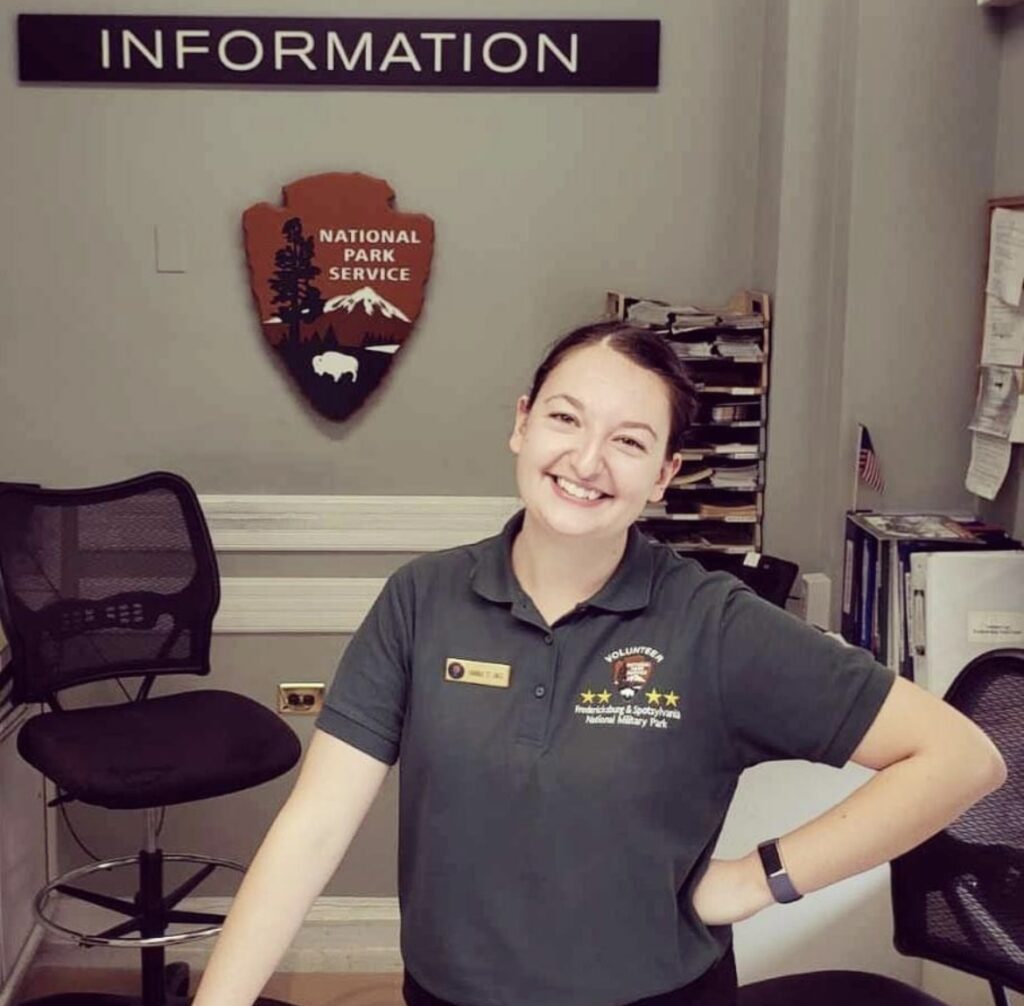
In the Fall of 2019, I completed a 126-credit hour internship with the Fredericksburg and Spotsylvania National Military Park. I was trained to help the staff at the Fredericksburg Visitor Center, which interprets the December 1862 Battle of Fredericksburg. While this battle was not as notable as other Civil War battles such as Gettysburg and the Siege of Vicksburg, I argued that Fredericksburg was the beginning of the end of the war. The extremely lopsided defeat of the Union Army (with Union troops far outnumbering Confederate troops at the battle) created an overzealous confidence for the Confederate Army, which caused them to lose sight of reality moving further into the war. For the Union, their defeat created a need to fight back, to get revenge for the lopsided loss at the battle. After all, Union troops shouted “Fredericksburg! Fredericksburg!” while repulsing Pickett’s Charge during the Battle of Gettysburg, proving that this smaller battle stayed in the hearts and minds of the Union troops.
Intern Duties: Guided Tours
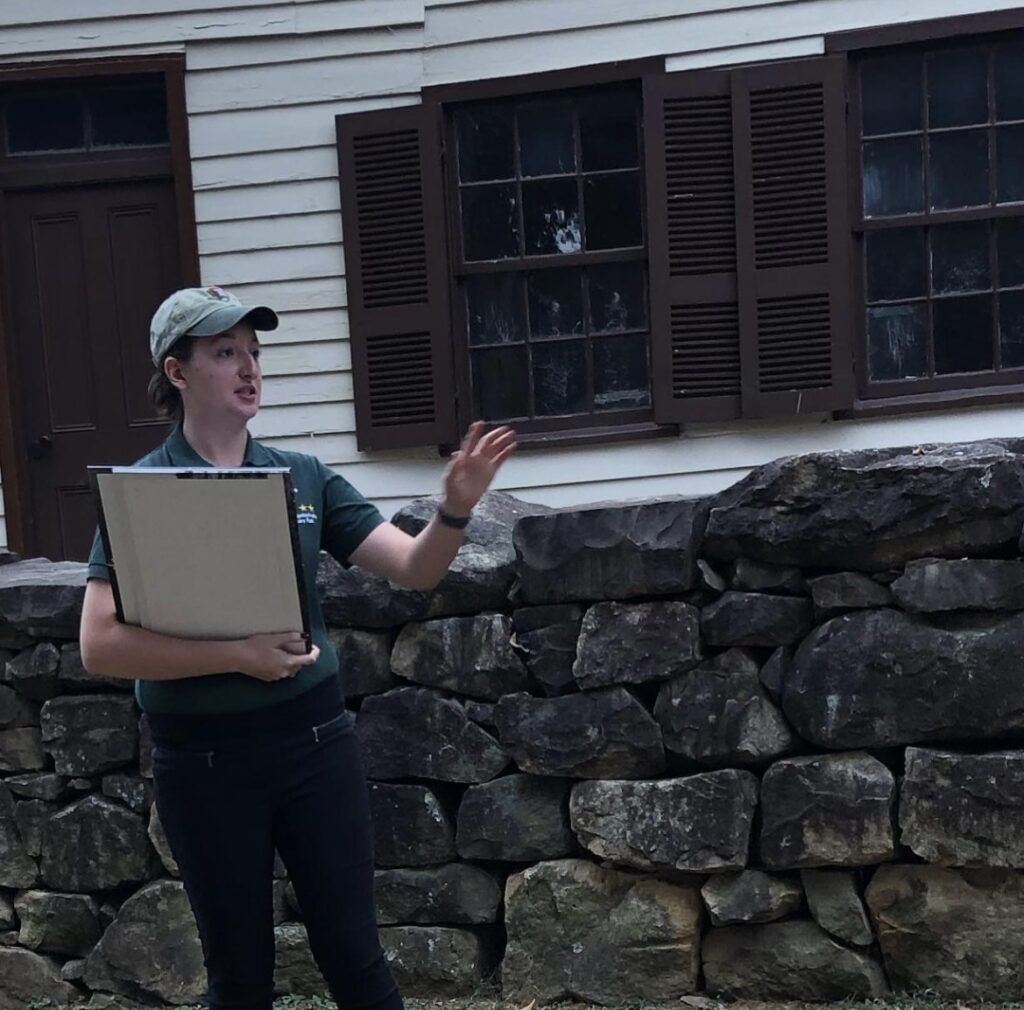
At the start of my internship, I was tasked with developing a 35-minute tour of the Sunken Road on the Fredericksburg Battlefield. I was required to include a few basic pieces of information about the battle in my tour, but I was otherwise able to to build the rest of it using a theme and content objectives I chose myself.
The theme of my tour was “Ineffective communication on both sides of the conflict led to numerous casualties during the Battle of Fredericksburg, negatively affecting morale for Confederate and Union soldiers alike.” This theme was inspired from a point made by the Park’s Lead Historian, Frank O’Reilly: the interpretation must have empathy. Empathy for the human beings whose story you are telling, and empathy for the visitors who have come from many different backgrounds to hear that story.
Frank’s discussion of empathy revolutionized the way I think about history and interpretation. I wanted to tell a story that was distinctly human; numbers and dates are important when interpreting the Civil War, but it is human emotions, such as fear, hope, and courage that visitors can connect with. If I can get visitors to walk away with the understanding that at the end of the day, the stories I tell came from real people with real lives and real families of their own, I can facilitate a much stronger connection between them and the past.
For this reason, I chose to center my tour around miscommunication. It is something that people face on a daily basis, at times with little consequence and at other times, momentous consequence. By using something so common to the human experience, I could build a foundation upon which I could facilitate stronger empathy and connections between the visitors and people in the past. The tour made sure to comprehensively cover the battle, but it was in the personal accounts of the battle and recounted emotions shared during the tour that allowed people to walk away with a greater understanding of and connection with history.
Intern Duties: Staffing the Fredericksburg Battlefield Visitor Center
I was also trained to staff the information desk at the Fredericksburg Battlefield Visitor Center. When visitors entered the visitor center, I would welcome them to the Park and depending on their interest, make suggestions on which activities to do during their visit. I also helped orient visitors to both the museum exhibits and the battlefield.
Answering questions about the battle was also an important part of staffing the information desk. Questions ranged from basics on the battle to questions about the ancestors of visitors’ involvement in the battle. For the latter, if the visitor knew their ancestor’s regiment, we could use troop movement maps to show visitors approximately where their ancestor would have been during the battle.
Duties also included tasks such as recording temperature and humidity readings from the exhibits and restocking brochures.